

Announcing Audora 2.0: Our Biggest Release Yet
What's New in Audora: 20 Updates Built for Auditors Who Move Fast
Audits don't slow down because auditors don't know what to do. They slow down because the tools make them do more work than they should, clicking through the same setup screens again, tracking down approvals one at a time, re-entering the same dates from last year, and hunting for status on tasks that should just tell you.
Audora 2.0 is here. Twenty updates. All live. All pointed in the same direction: make every part of the audit workflow faster, cleaner, and easier to manage from kickoff to close. Whether you're running your entire engagement lifecycle from a single configurable template, rolling over last year's engagement in a few clicks, bulk-approving evidence, or finally knowing where every task stands without clicking into it as this release was built for teams that move.
Here's everything that's new.
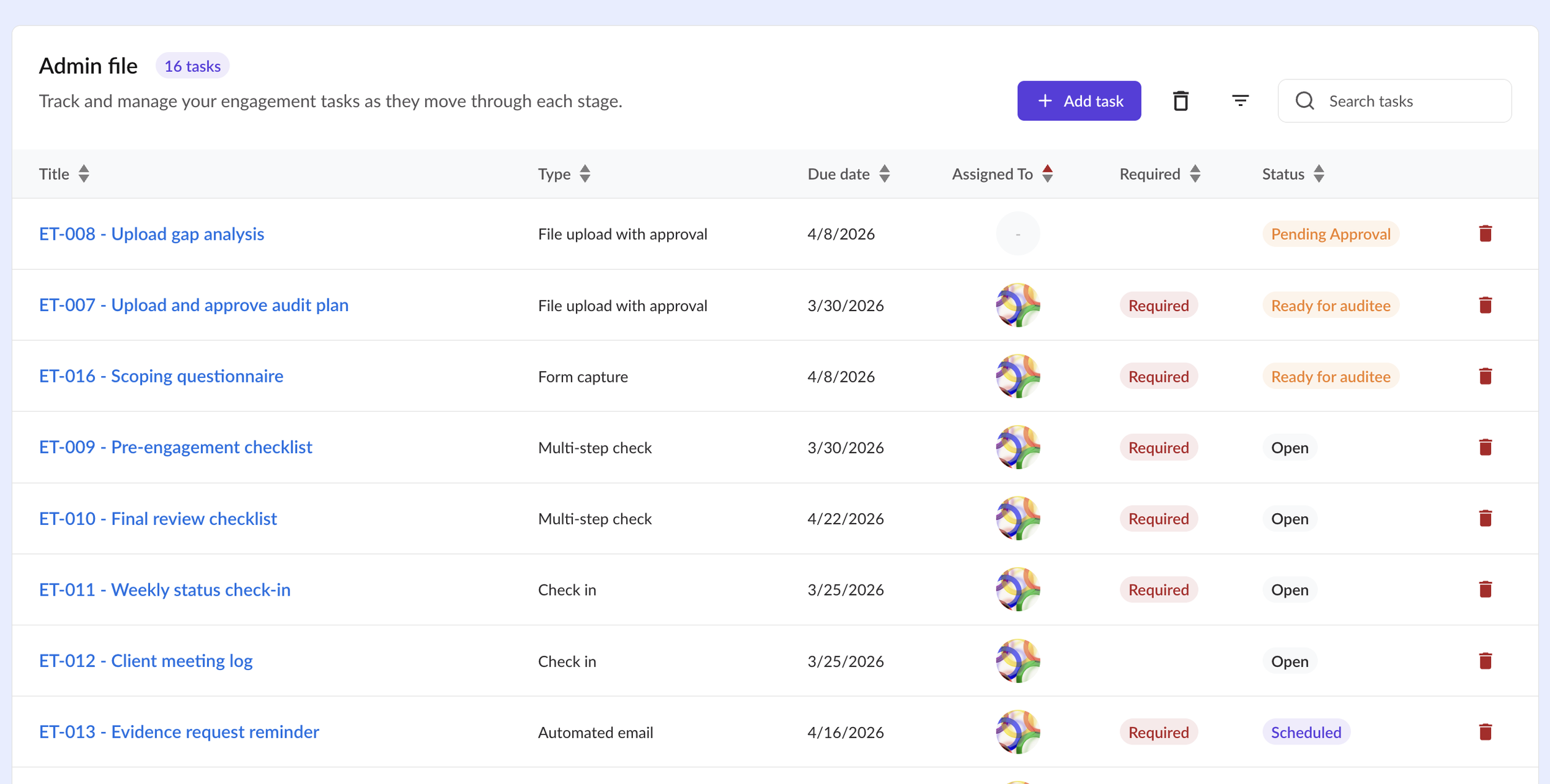
1) Admin File Template (Your Entire Engagement, In One Place)
Most audit software handles execution that includes evidence requests, controls, reports. But what about everything else? The scoping calls. The readiness checklist. The pre-engagement questions. The quality review at the end. For most firms, that work lives in a spreadsheet, a shared drive, or someone's inbox.
The Admin File changes that. It's a fully configurable engagement management template that lives inside Audora and spans your entire audit lifecycle, from pre-sale through final delivery. Every task your firm needs to track, every required question, and every piece of documentation can live in one place. Tasks support a wide range of capture types including form capture, simple checks, check-ins, approvals, file uploads, multi-step workflows, and automated emails. Mark tasks required or optional, align them to specific audit phases, and export the full file at any time, including at engagement close for offline storage.
Why it matters: When your pre-engagement work, scoping, project management, workpapers, and quality review all live in the same place as your evidence and controls, your team stops hunting across tools and your engagement record is complete from day one to final deliverable.
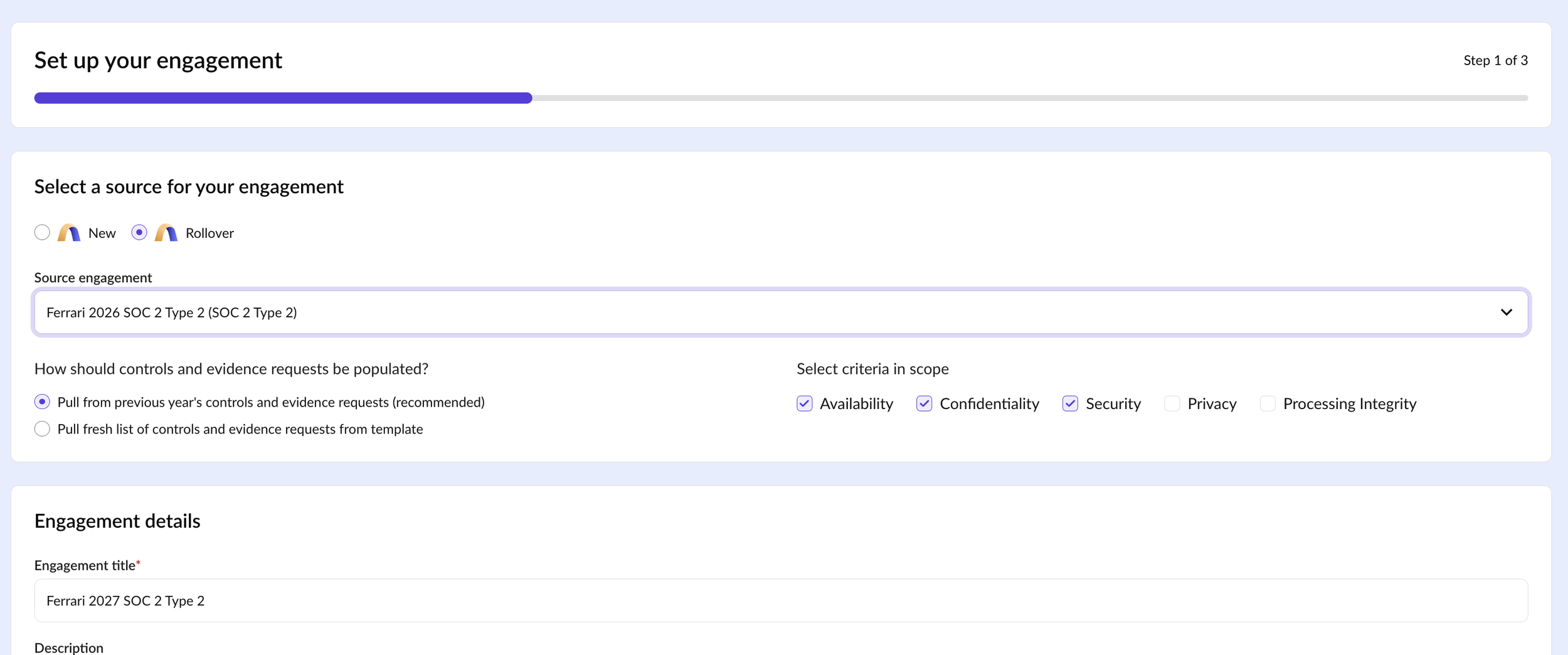
2) Self-Service Engagement Rollover (Last Year's Work Is This Year's Head Start)
Starting a new engagement from scratch every year is one of the most preventable time sinks in audit.
With the new customizable self-service rollover feature, you can roll a prior year's engagement directly into the new one and make it your own before you dive in. Update the controls, revise the objectives and criteria, edit names, titles, and descriptions, and you're ready to go. No rebuilding from zero.
Why it matters: Less setup time, faster kickoff, and a workflow that actually matches how audit teams operate year over year.
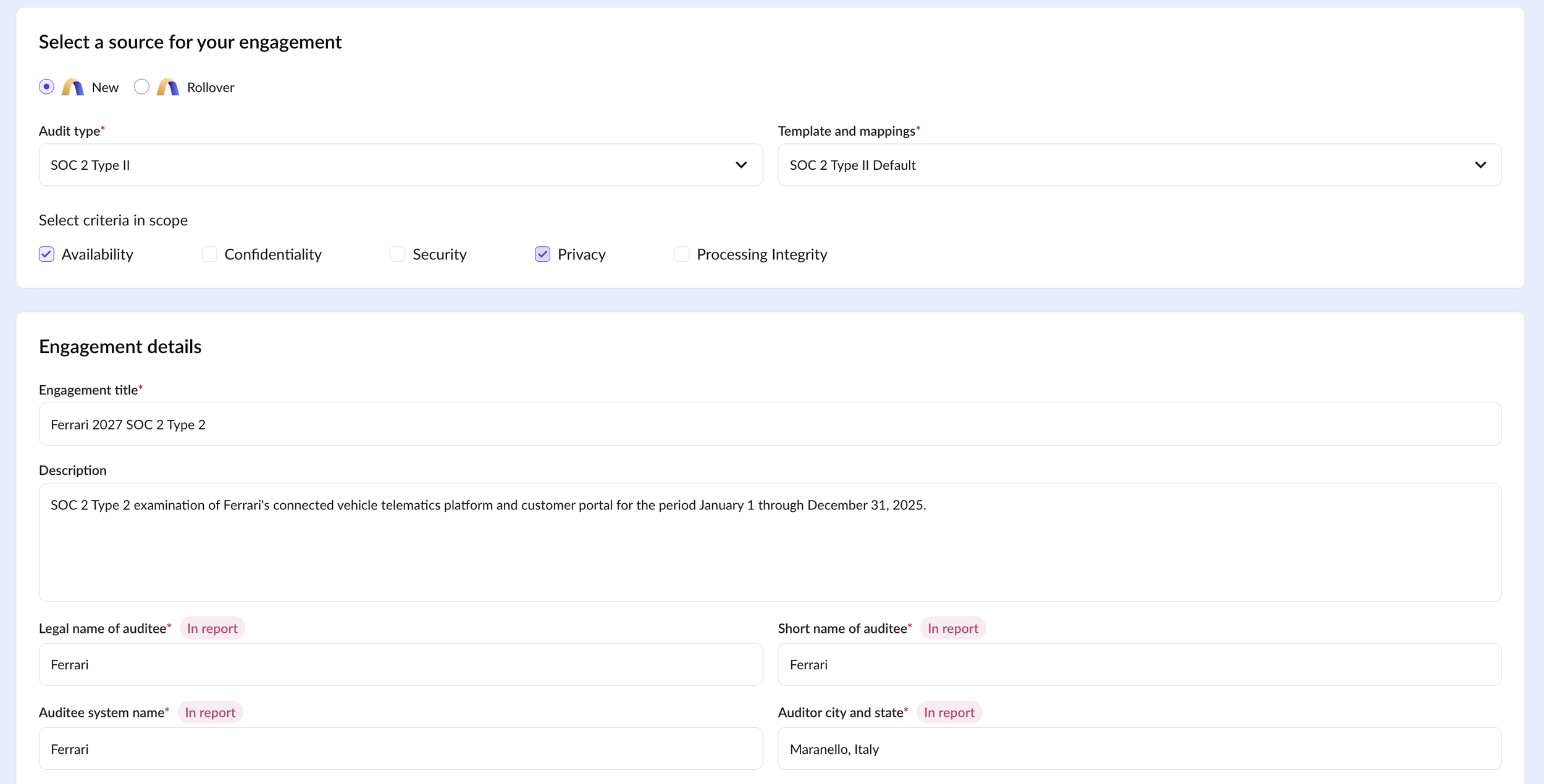
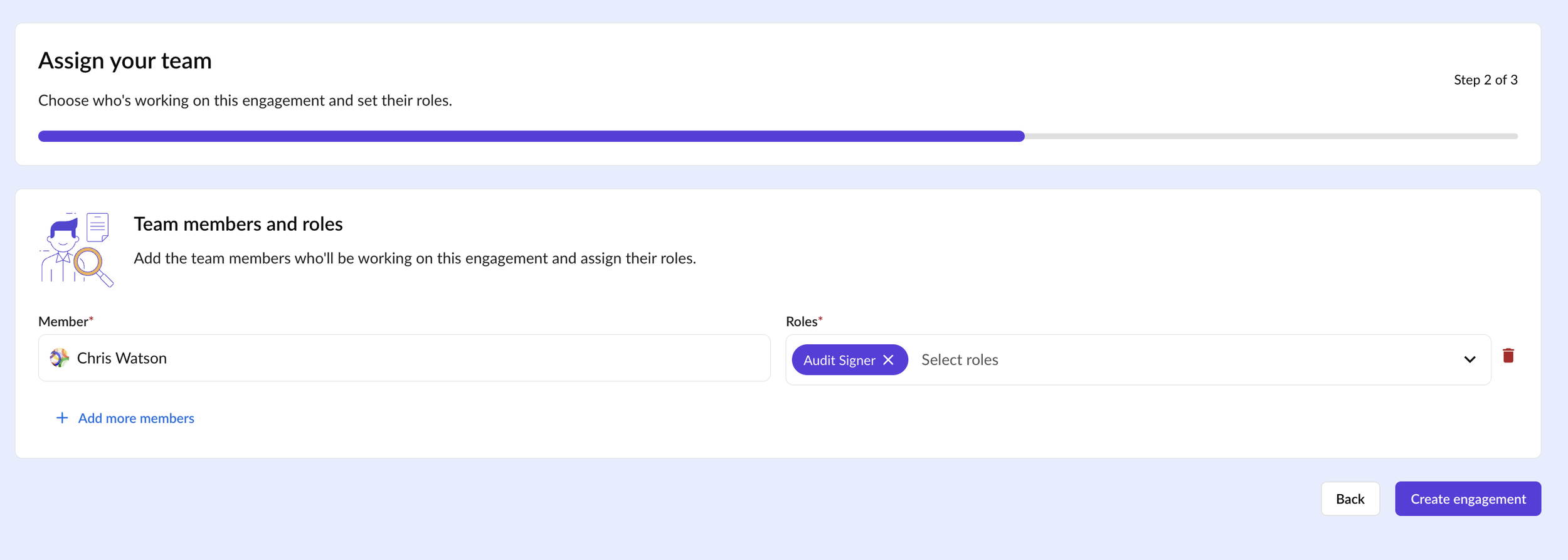
3) Major Engagement Setup Improvements (The Setup That Used to Take Hours, Doesn't)
The first few minutes of setting up a new engagement sets the tone for everything that follows.
We made major improvements to the engagement creation and setup experience streamlining the flow, making steps clearer, faster, and more guided. Whether you're starting from scratch or rolling over from a prior year, getting started now takes minutes instead of a major time investment.
Why it matters: Faster setup means more time for actual audit work and a better first impression for clients entering Audora for the first time.
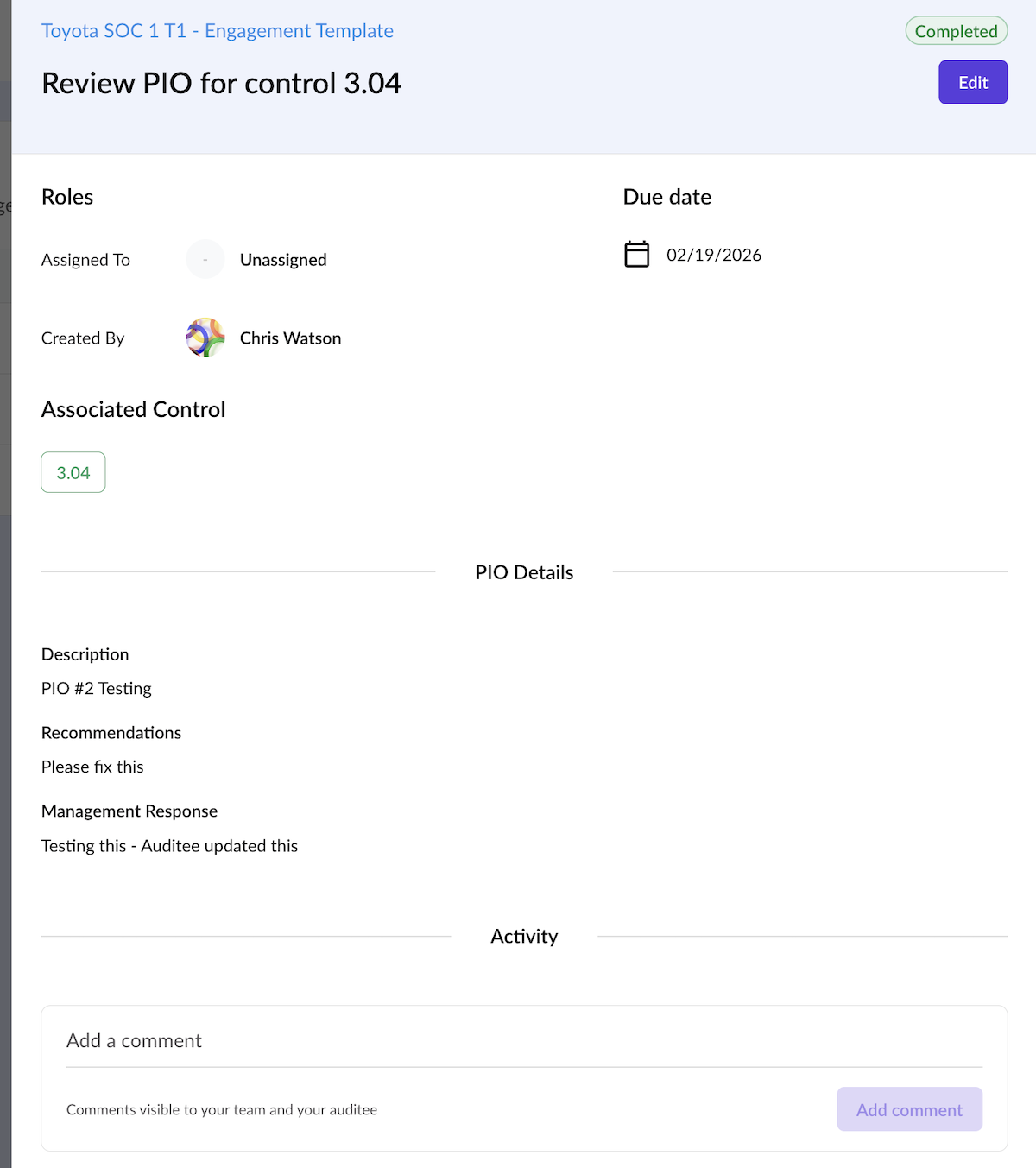
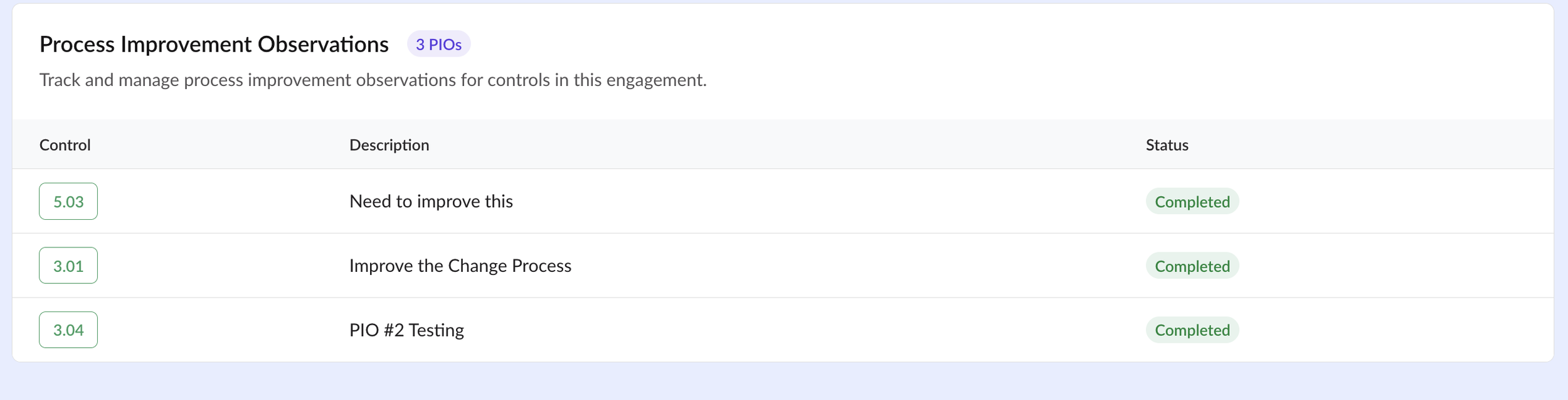
4) Process Improvement Opportunity (PIO) Section (Your Recommendations Deserve a Permanent Address)
Audits surface more than just deficiencies, they surface opportunities. Now there's a dedicated place to capture them.
The new PIO section lets auditors document recommendations and improvement insights during the engagement, right alongside the rest of the audit work. No more sticky notes, separate docs, or trying to remember the good stuff at the end.
Why it matters: Better audit value, cleaner deliverables, and a built-in way to surface improvement insights for your clients.
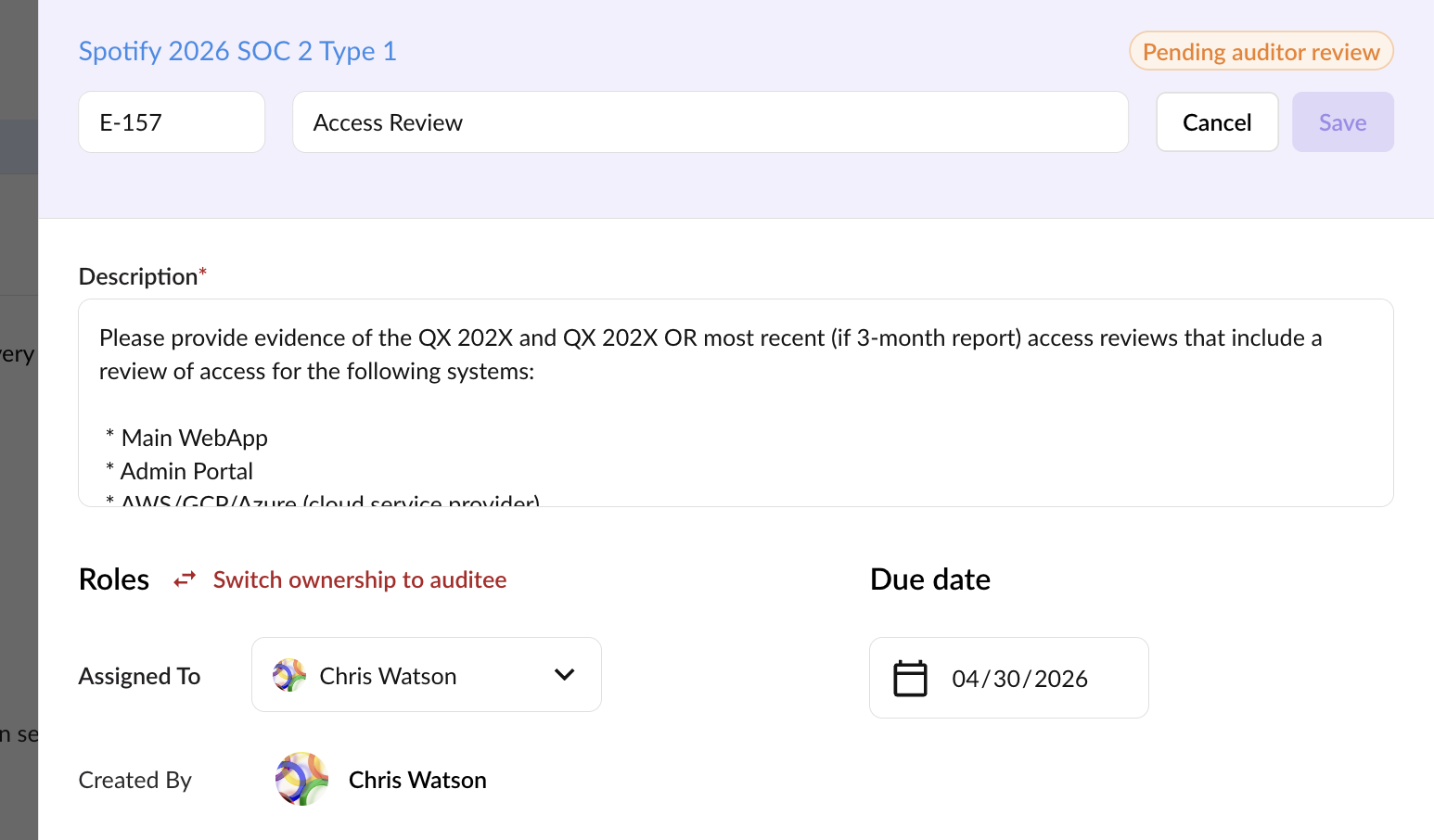
5) Cleaner Switch Ownership Experience (Handoffs That Don't Require Handholding)
Transferring ownership of a task or engagement should be straightforward. Now it is.
We redesigned the Switch Ownership feature to be clearer and more intuitive and less confusion about what you're changing, who you're assigning it to, and what happens next.
Why it matters: Smoother handoffs between team members means fewer mix-ups and less back-and-forth during transitions.
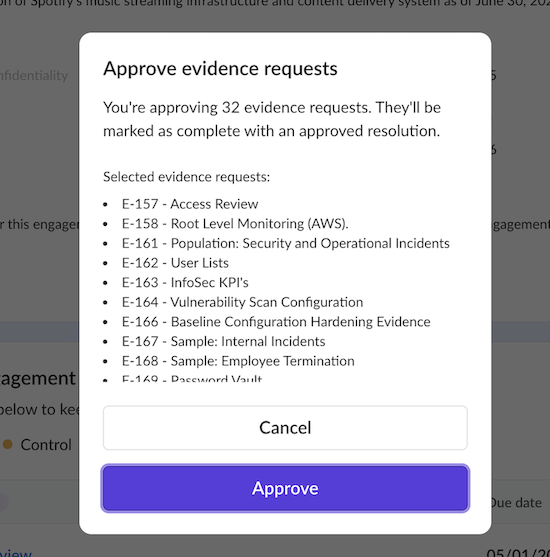
6) Bulk Approval of Evidence Requests (Finally, a Fast Lane for Evidence Sign-Off)
Approving evidence requests one by one is nobody's idea of a good time, especially when you're reviewing a large batch at once.
Now you can bulk approve evidence requests with just a few clicks. Select what you're ready to approve, hit approve, and move on.
Why it matters: Fewer repetitive clicks, faster review cycles, and more time for the work that actually requires your judgment.
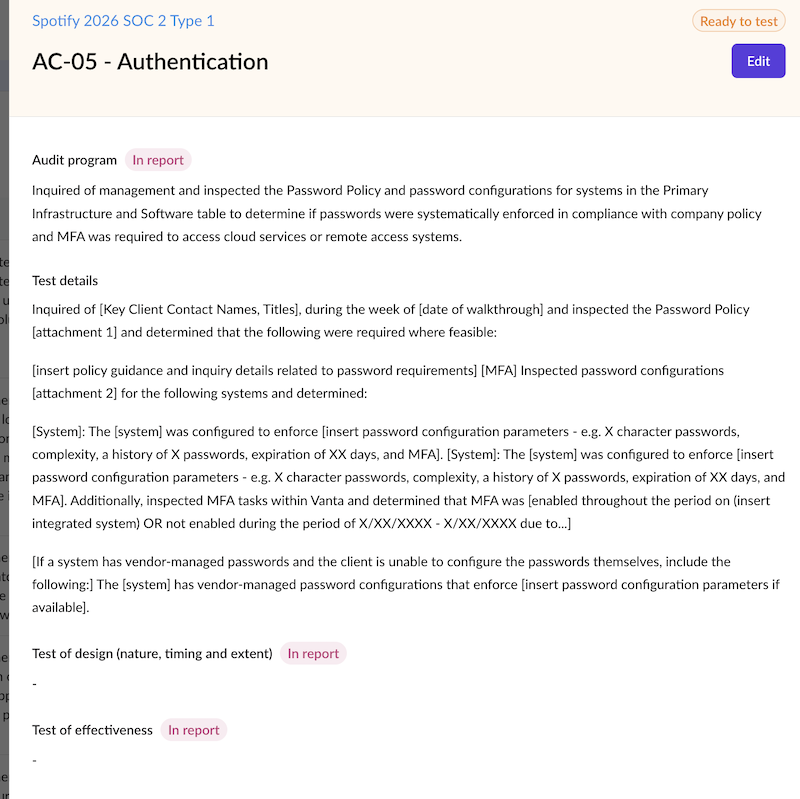
7) Test of Design + Test of Effectiveness Fields (Because "It Passed" Isn't Documentation)
Thorough control testing requires more than a pass/fail checkbox. Auditors need to document how controls are designed and whether they're actually working.
We added dedicated Test of Design and Test of Effectiveness fields to controls, giving you structured space to capture both layers of testing, clearly and consistently, right where the evidence lives.
Why it matters: More defensible workpapers, cleaner documentation, and a structure that aligns with how auditors are trained to think about control testing.
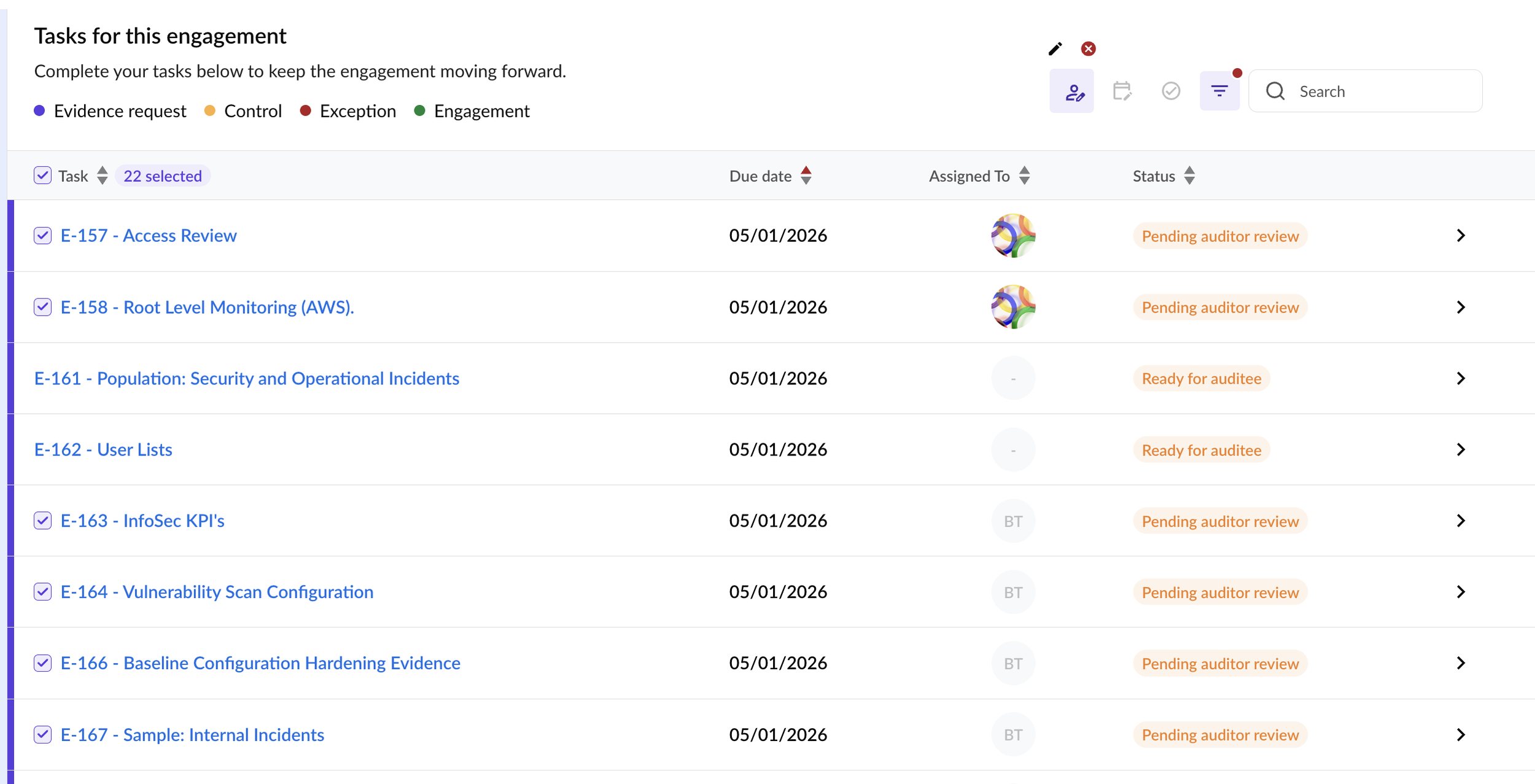
8) Select All Rows Across All Pages (Yes, All of Them)
The checkbox in a table header should do exactly what it implies, select everything. Now it does.
Checking the header checkbox now selects ALL applicable rows across every page, not just the ones visible on screen. You'll also see a running count of how many rows are selected so you always know exactly what you're acting on.
Why it matters: No more page-by-page selecting. Bulk actions work the way you expect them to.
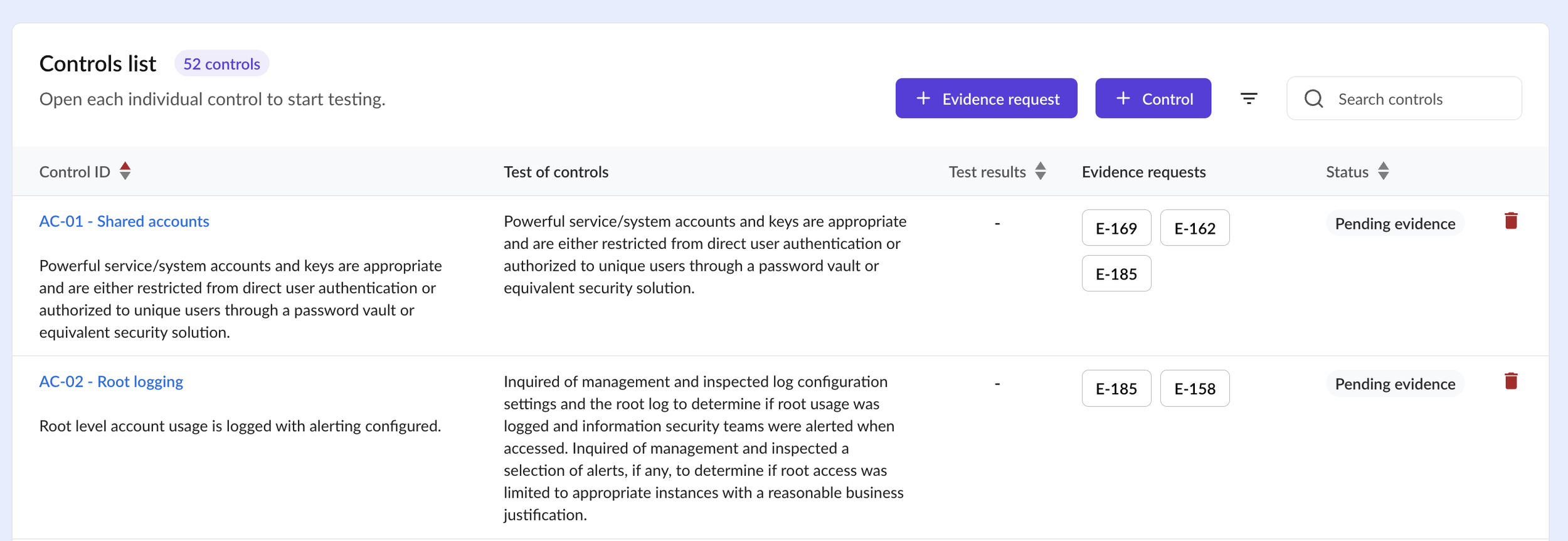
9) Summary Counters for Controls + Audits (The Numbers You Didn't Know You Needed)
At a glance, you should always know the scale of what you're working with.
We added summary counters throughout Audora to show the total number of controls and audits in your workspace and no more mentally tallying rows or scrolling to estimate scope.
Why it matters: Better visibility into your portfolio and faster context-setting at the start of every session.
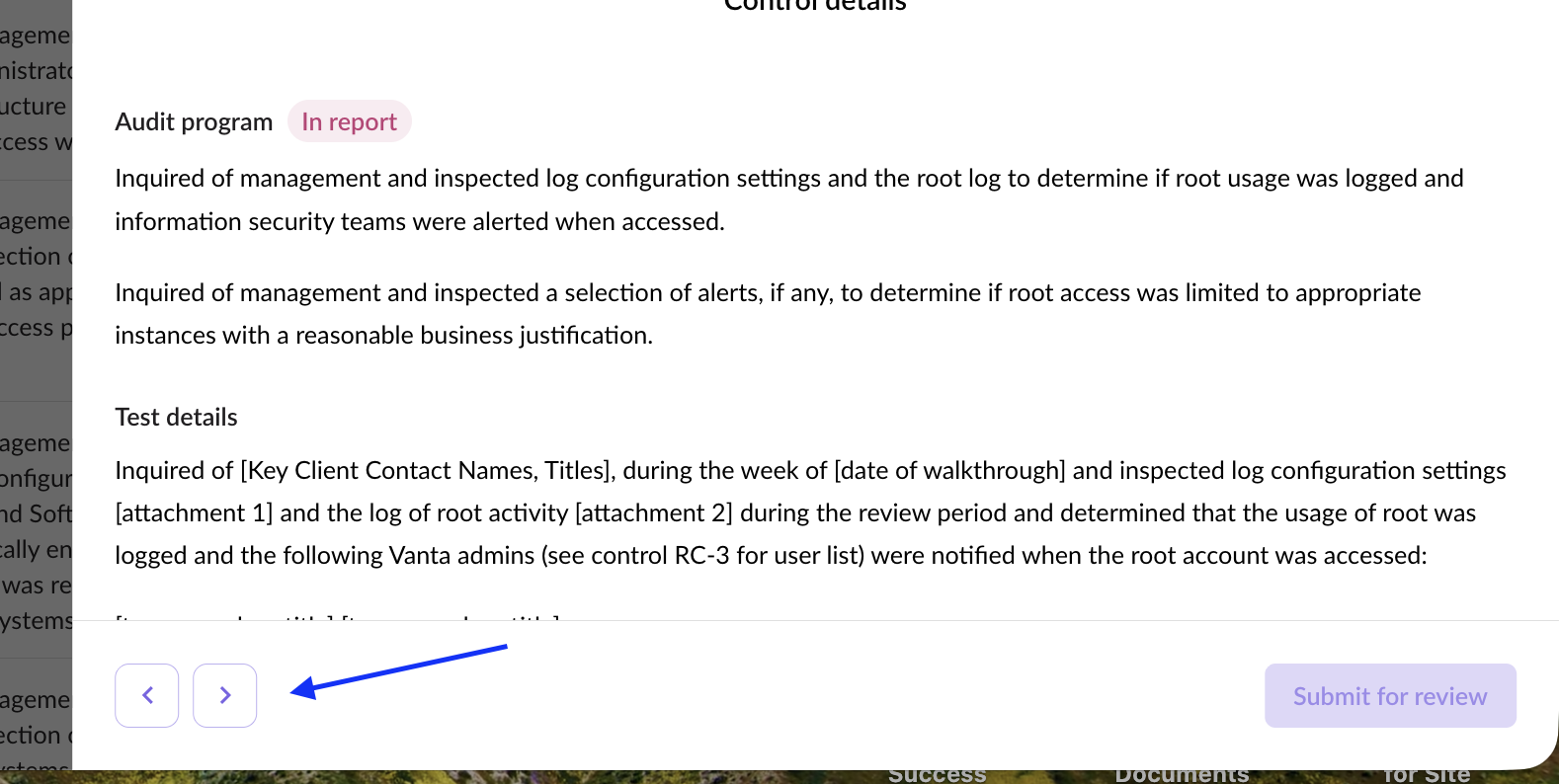
10) Arrow Navigation in Control Drawer (Stop Closing the Drawer)
Moving between controls shouldn't require closing and reopening the drawer every time.
New arrow navigation buttons let you jump quickly between controls without losing your place while keeping you in flow and cutting unnecessary clicks.
Why it matters: Faster review sessions and a smoother, more continuous experience when working through large control sets.
11) Drag and Drop Multi-File Uploads (Upload Like It's 2026)
Evidence collection shouldn't require uploading files one at a time.
Both auditors and auditees can now drag and drop multiple files at once, select a batch, drop them in, done. No more repeat uploads, no more waiting.
Why it matters: Faster evidence collection, less friction for auditees, and a more modern experience across the board.
12) Expanded Supported File Formats (Yes, We Take That File Too)
Along with the drag-and-drop upgrade, we expanded the list of supported file formats so auditors and auditees can upload the evidence types they actually work with, no workarounds required.
Why it matters: Less friction during evidence collection and fewer format-related blockers for everyone involved.
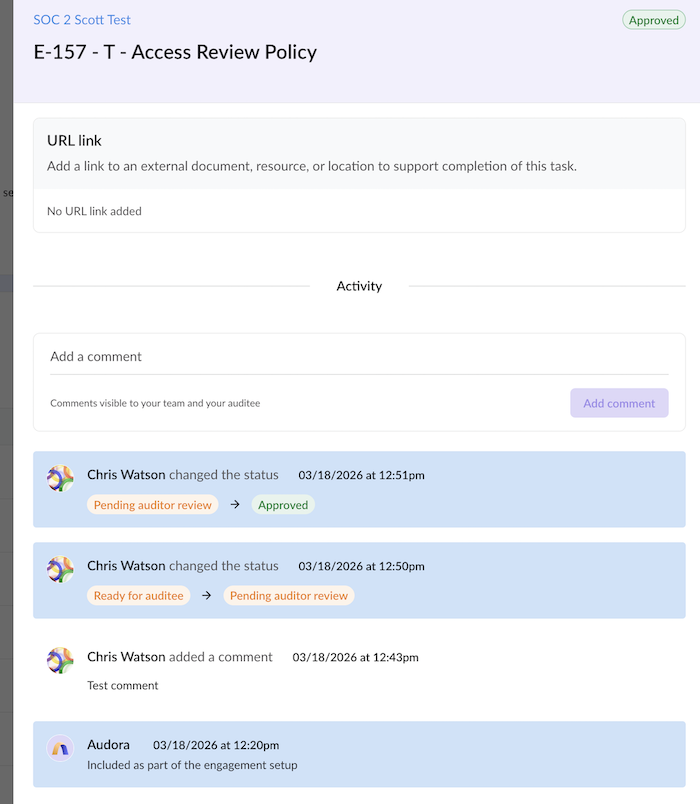
13) Real-Time Status Tracking + Full Audit Trail (Who Did What, When and Prove It)
Status shouldn't be something you have to ask about. It should be visible and traceable.
Every task in Audora now includes real-time tracking of status changes as they happen, plus a full history: what it changed from, what it changed to, who made the change, and the exact date and time. A clean, built-in audit trail with zero extra effort from your team.
Why it matters: Fewer check-in conversations, faster triage, and when it matters most, defensible documentation of every step in the review and approval process.
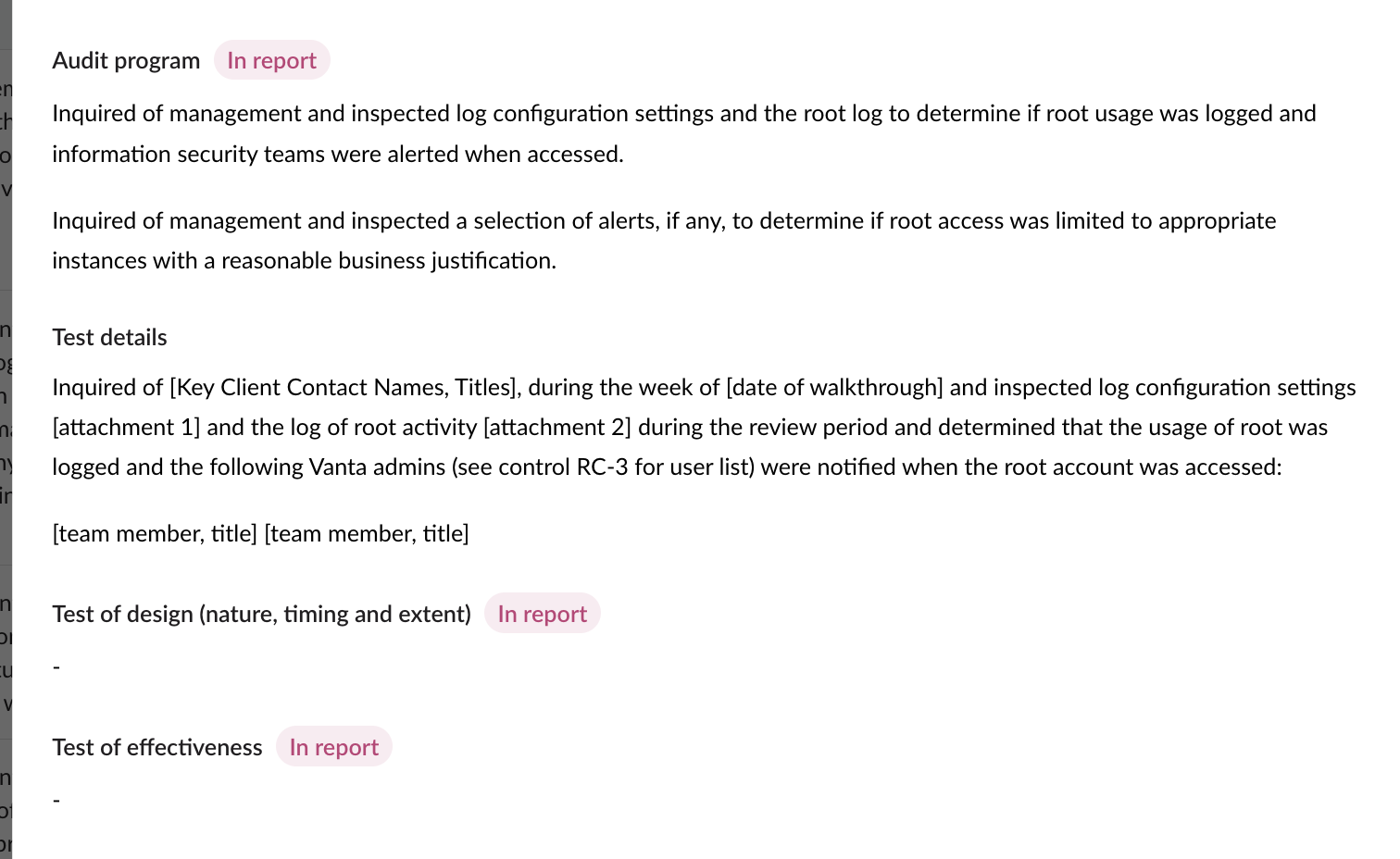
14) Red Field Indicators for Report Data (No More Guessing What Goes in the Report)
You shouldn't have to wonder which fields flow into the final report or find out at the end that something was missing.
We added visual indicators next to field titles that pull into report output, so it's immediately clear what data matters for reporting before you get there. No documentation hunting. No surprises at delivery.
Why it matters: Auditors can fill in the right fields with confidence and nothing falls through the cracks between evidence collection and report generation.
15) System Description Review Workflow (Nothing Finalized Without a Second Set of Eyes)
The system description is one of the most critical pieces of any engagement and it shouldn't be finalized without review.
The system description task is now automatically routed to the auditor for review before being finalized, building a formal checkpoint directly into the workflow.
Why it matters: Fewer last-minute surprises, stronger quality control, and a more defensible process from start to finish.
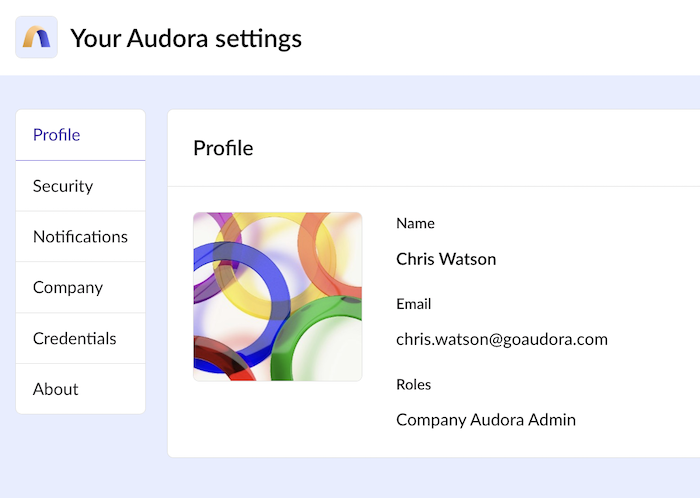
16) Profile Pictures + Company Profile Updates (Your Face, Your Firm, Your Setup)
User profile pictures now appear across all tasks throughout Audora so you can see at a glance who owns what, who submitted evidence, and who's involved at each step. We also made improvements to company profile details, giving firms a more complete profile experience and easier access to support when you need it.
Why it matters: Clearer accountability across tasks, a more personalized platform experience, and faster paths to help when something comes up.
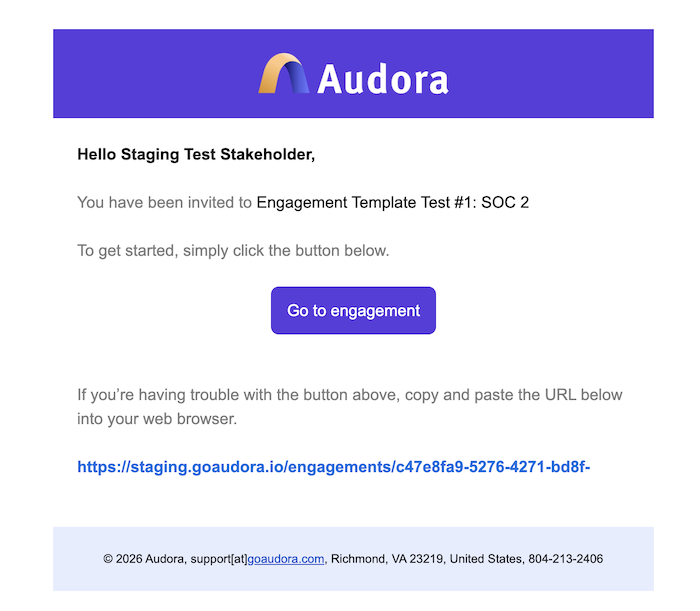
17) Verification + Invitation Email Improvements (First Impressions Start in the Inbox)
We improved all verification and invitation messaging with clearer language, better formatting, and a more consistent experience across all email types users receive when joining an engagement or verifying their account.
Why it matters: Fewer "I never got the email" conversations, fewer access issues, and a more professional first impression for auditees entering the platform for the first time.
18) Template Creation + Validation Improvements (From Blank Page to Audit-Ready in Minutes)
We made improvements to template creation and validation, including stricter naming convention checks, better feedback when something's off, and default templates for reports and mappings that come pre-loaded so you can get an audit up and running within minutes.
Why it matters: Less template troubleshooting, faster report generation, and a more reliable path from setup to execution.
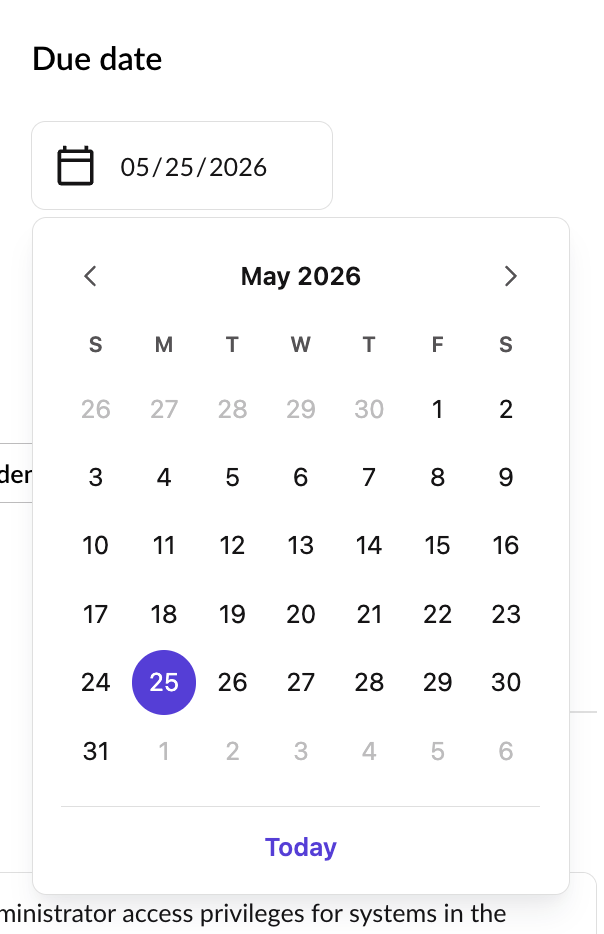
19) New On-Brand Date Selector + Loading Spinners + Graphic Improvements (Polished, Inside and Out)
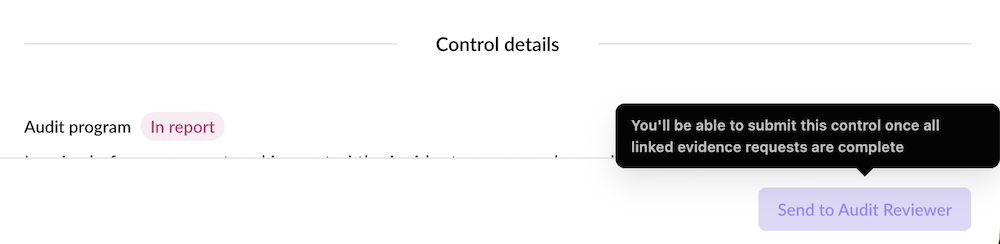
We rolled out a new on-brand date selector with cleaner entry functionality, replaced generic loading states with new on-brand progress rings, and made graphic improvements all over the platform, refining how information is presented, how elements are spaced, and how the overall experience feels as you move from screen to screen. We also added hover-over tooltips across key tasks and features so guidance is always one hover away.
Why it matters: Better visual design reduces cognitive load and makes it easier to stay focused on the audit work itself. Small frictions add up, removing them keeps auditors in flow.
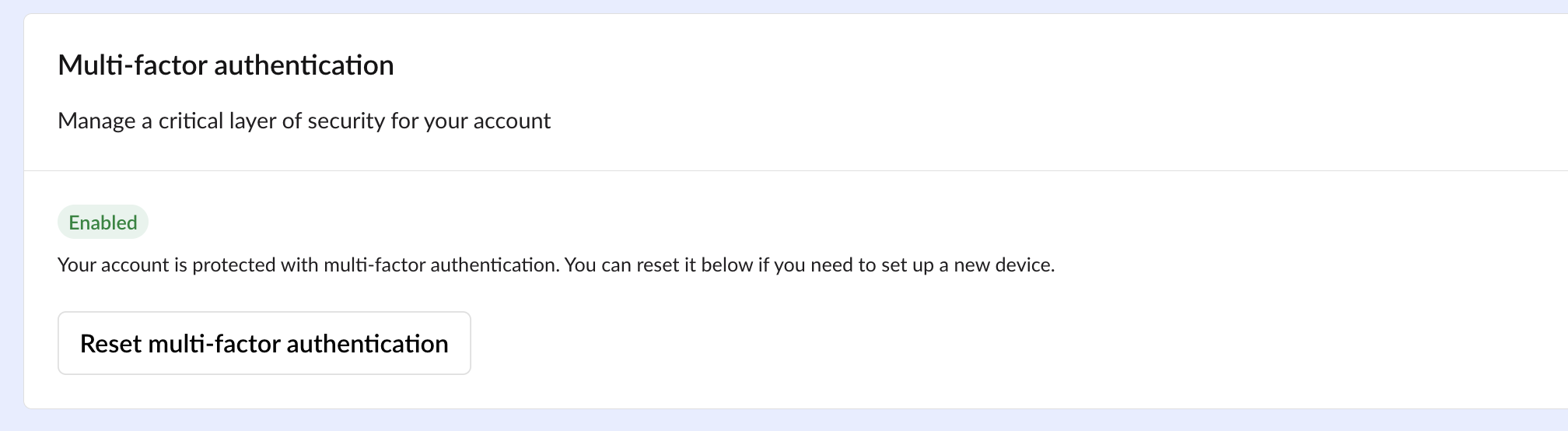
20) MFA (Multi-Factor Authentication) + Security Improvements (The Foundation Everything Else Runs On)
Multi-factor authentication is now available across Audora, adding a critical layer of protection for your team's accounts and your clients' data. Administrators can enable MFA org-wide in Admin Settings. We also squashed a significant number of bugs and made continued security improvements and patching across the platform and addressing edge cases, tightening up workflows, and keeping Audora stable and secure as we scale.
Why it matters: Audit engagements hold some of the most sensitive data a firm touches. MFA and ongoing security investment ensure Audora is a platform you can trust with all of it, from the first scoping call to the final deliverable.
What's Next
Audora 2.0 is a milestone, but we're just getting started.
Here's what's on the horizon:
Control and task queues
Engagement readiness support
Notification improvements
Additional framework support, including SOC 3, ISO, HIPAA, PCI, and more
Deeper integrations with GRC platforms and third-party tools
Continued performance and scalability improvements
If you're already on Audora, keep an eye on your inbox, more updates are on the way.
Want to see it live? 👉 Try Audora: Book a Free Trial
Book a Strategy Session: Book a Session
